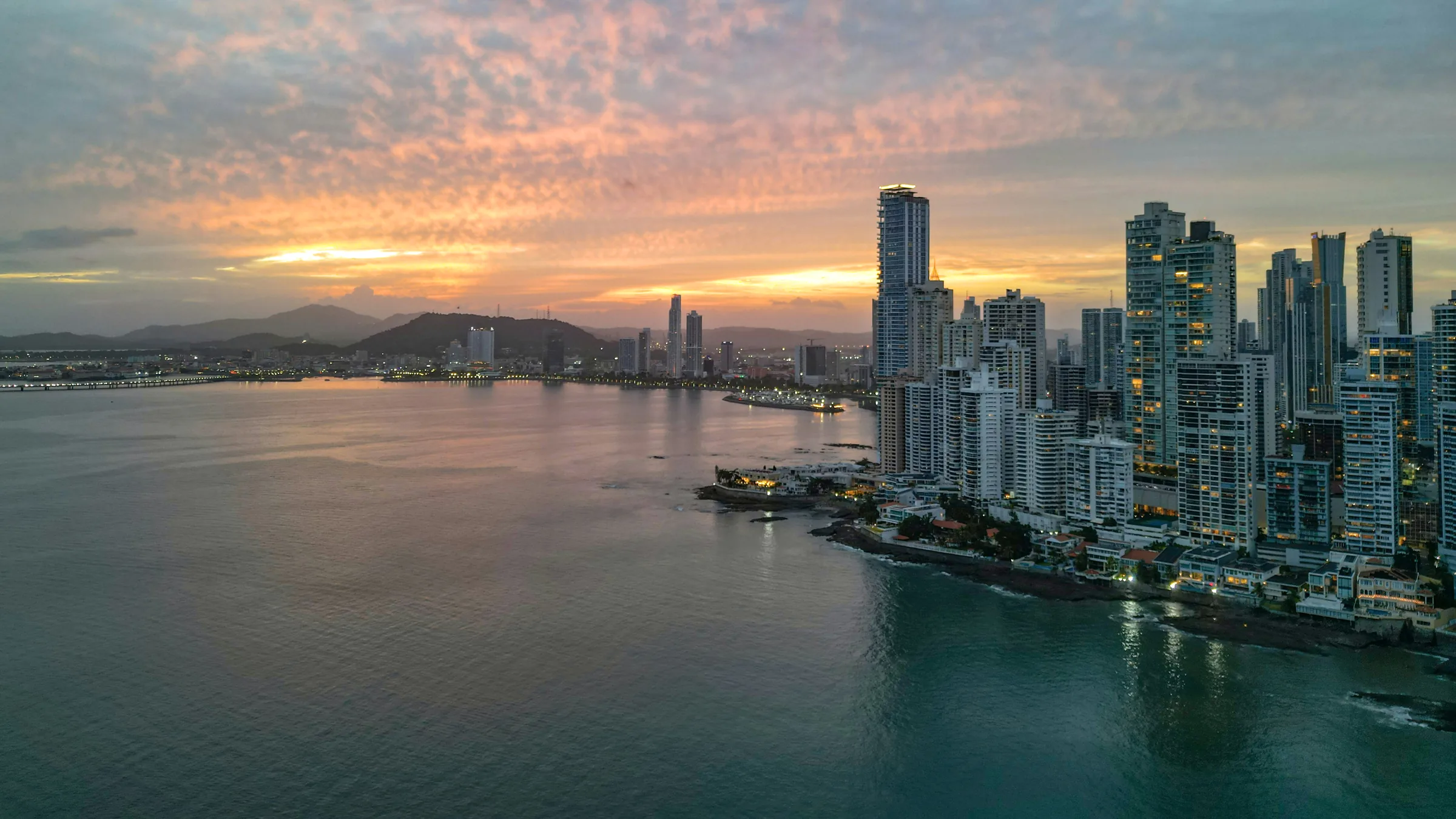
High-rise buildings beside Panama City’s bay at sunset.

Panama · Panamá Province

Panama
City.

Two World Heritage colonial cities, urban forest and the bay on foot.

Photo: Sol Cerrud

Before you go,
understand the place.

Panamá Viejo, founded in 1519, was the first European city on the Pacific coast of the Americas. After its destruction in 1671, the city moved to what is now Casco Antiguo. Together they form a single UNESCO World Heritage property, inscribed in 1997 and extended in 2003.

Best time to go
The city's dry season runs from January to mid-April and the rainy season from May to December, according to ETESA's climate series for the Panamá district (1977–2010 normals, published by IMHPA); for the Pacific side as a whole, IMHPA places the rains from May to November. October is the wettest month, averaging about 330 mm and 20 rainy days at Tocumen. Rain tends to fall in the afternoon, with a drier spell called the 'veranillo' in July and August (IMHPA). The annual mean temperature is about 27 °C. In the rainy season, plan outdoor visits for the morning and keep museums for the afternoon.
Getting there
By air: Tocumen International Airport (PTY), east of the city. Official taxi: stands outside arrivals at Terminals 1 and 2; published flat fare of US$30 to 'Panamá Centro (City)' for up to 2 passengers, US$38 to Amador and US$35 to Albrook. Metro: Line 2 has a branch with ITSE and Aeropuerto stations; a free shuttle links the station with the terminals (T1 door 2, T2 door 18) daily from 5 a.m. to 11 p.m. (Tocumen); to connect, the Metro must also be running (hours below). For downtown, change at Corredor Sur and then to Line 1 at San Miguelito. Fares per the Metro guide: Line 2 US$0.50, Line 1 US$0.35, both US$0.85. The Metro accepts contactless Visa and Mastercard cards at the turnstiles showing their logos; tap in and out with the same card (SONDA, January 2023; Tocumen). According to the transport-card account Tita (@TarjetaMetrobus) on 18 February 2026, Apple Pay and Google Pay are also accepted on the Metro. In September 2026 the Metro upgraded its top-up and validation system, with early delays reported. Metro hours: Monday–Friday 5 a.m.–11 p.m.; Saturday 5 a.m.–10 p.m.; Sunday and holidays 7 a.m.–10 p.m. MetroBus also serves the airport, daily from 5 a.m. to 11 p.m. (about US$0.25–1.25 per ride depending on the route); the transport card is sold in both terminals (Tocumen). Overland: the Gran Terminal Nacional de Transporte at Albrook links to the rest of the country and Central America, next to Albrook station on Line 1. Around town: the Metro for long hops; taxi or app for Panamá Viejo, Amador and at night. Yellow taxis have no meter: agree the fare before getting in.

Six ways to explore

Themed guides

Places grouped by theme, to plan your day.

  • 6 places

    Casco Antiguo on foot

    A short loop through the historic quarter's squares, churches and museums. Plaza de Francia and Las Bóvedas are closed for works for about two years from mid-2026.

    Open the full guide
  • 5 places

    City museums

    History, biodiversity, Guna textiles and contemporary art. Nearly all close on Mondays.

    Open the full guide
  • 6 places

    Free or nearly free

    Walks and visits with no ticket or under US$6.

    Open the full guide
  • 5 places

    Nature in the city

    Forest, wildlife and sea minutes from downtown. Go early: it gets hot, and rain is more likely in the afternoon.

    Open the full guide
  • 5 places

    Rainy-day options

    Indoor plans for the rainy season, which in the city runs May to December.

    Open the full guide
  • 5 places

    Along the bay

    Waterfront walks, seafood and the ferry out to Taboga.

    Open the full guide

The place, in context

Everything you can do

Closed or restricted places are included and flagged, so you know what to expect.

Showing 18 of 18 · 2 closed or restricted, flagged · 1 unconfirmed, flagged

Nature and jungle · 3

Sea, beach and reef · 1

Lakes, rivers and waterfalls · 1

Volcano and mountain · 1

Living culture · 11

City and food · 1

Panama City · Practical guide

The essentials

  1. Ruins and Cathedral tower of Panamá Viejo
  2. Casco Antiguo's streets, churches and museums
  3. The Biomuseo, Frank Gehry's building in Amador
  4. An early walk up Ancón Hill
  5. Trails and lookouts in the Metropolitan Natural Park
  6. Ferry day trip to Taboga Island

Panama City · Practical guide

Suggested itinerary

  1. Day 1Casco Antiguo: Cathedral and Plaza de la Independencia, Interoceanic Canal Museum, San José Church and the Mola Museum (Tuesday to Sunday). In the afternoon, the Cinta Costera and lunch or an early dinner at the Mercado de Mariscos, by taxi or app.
  2. Day 2Panamá Viejo in the morning (opens 8:30 a.m., closed Mondays; arrive by taxi or app). In the afternoon, the Biomuseo (get in well before 3:00 p.m.) and a walk along the Amador Causeway; Punta Culebra if it is Wednesday to Sunday.
  3. Day 3Early, Ancón Hill (from 6:00 a.m.) or the Metropolitan Natural Park trails (from 7:00 a.m.). Then a day trip to Taboga Island by ferry from Amador, or a Canal visit (see the 'Canal & Gamboa' guide).

Panama City · Practical guide

Where to stay

Casco Antiguo
Hotels in restored buildings, with restaurants and bars a short walk from the museums. Lively at night; neighbouring districts (Santa Ana, El Chorrillo) call for caution after dark.
Bella Vista, El Cangrejo and Obarrio
Central hotel and shopping area near Metro Line 1 (Vía Argentina and Iglesia del Carmen stations) and the Cinta Costera.
Amador Causeway
Quieter and on the water, next to the Biomuseo and the Taboga ferries. Far from the Metro: you will rely on taxis, apps or the Albrook–Amador bus.
Albrook
Handy for buses to the rest of the country: next to the main bus terminal and Albrook Metro station. The FCDO advises caution against theft around Albrook Mall.

Panama City · Practical guide

Practical tips

  1. On Mondays, Panamá Viejo, the Canal Museum, the Mola Museum, MAC and Punta Culebra are closed. Ancón Hill, the Metropolitan Natural Park and the Cinta Costera work well that day.
  2. Carry small US dollar bills: Canada advises this because fake US$50 and US$100 bills have been reported. The balboa circulates as coins; the banknotes in use are US dollars.
  3. Single-use plastics and polystyrene are banned in protected areas (Ancón Hill, Metropolitan Park): bring a reusable bottle.
  4. For Taboga, bring cash and your passport: there is no ATM on the island, according to the ferry operator.
  5. Do not swim in the Bay of Panama off the city: the FCDO warns of sewage pollution.
  6. For Panamá Viejo, Amador and nights out, use a taxi from a stand or a ride-hailing app. In a yellow taxi, agree the fare first and ask not to share the ride.

Safety and precautions

  • Canada keeps 'normal security precautions' for Panama but asks for a high degree of caution in the Calidonia, Curundú, El Chorrillo, Panamá Viejo, Río Abajo, Santa Ana and 24 de Diciembre districts, and in San Miguelito (updated 15 June 2026).
  • The UK FCDO flags pickpocketing on buses, at terminals and in crowded areas, and muggings around Albrook Mall, Vía España, Avenida Central, Calidonia, Casco Viejo and Panamá Viejo.
  • People have been robbed after using ATMs: use machines inside banks or malls and keep valuables out of sight (FCDO).
  • Carry ID such as your passport; police usually accept a printed copy (FCDO).
  • At night, avoid poorly lit streets and do not walk alone; use a registered yellow taxi from a stand (Canada) or an app, agree the fare before getting in and check the plate and driver.
  • Smoking in public places is banned, with fines of US$25–100; e-cigarettes are also banned in public places (FCDO).

Frequently asked questions

What do I need to enter Panama as a tourist?

According to Panama's National Migration Service: a passport valid for at least 3 months, proof of funds of no less than B/.500 (not required for under-18s), a confirmed onward ticket and, if your nationality requires it, a visa. You may also be asked for the entry card and biometric data. Whether you need a visa and how long you may stay depend on your nationality: check https://www.migracion.gob.pa/turistas/ and Migración's FAQ before travelling.

What currency is used?

The US dollar and the balboa (B/., PAB), both legal tender and of equal value: the balboa is Panama's monetary unit and equals one dollar. The balboa circulates as coins; the banknotes in use are US dollars. That is why you will see amounts in B/. or US$, which are worth the same.

Can I take the Metro from the airport to the city?

Yes. Line 2's Aeropuerto station connects to the terminals by a free shuttle. Change at Corredor Sur and, for Line 1, at San Miguelito. The combined ride costs US$0.85 according to the Metro guide.

What can I visit on a Monday?

Many museums and Panamá Viejo are closed. Ancón Hill (6 a.m.–6 p.m.), the Metropolitan Natural Park trails (7 a.m.–4:30 p.m.), the Cinta Costera and the Mercado de Mariscos (except scheduled cleaning Mondays) are open.

Are Plaza de Francia and Las Bóvedas open?

No. They have been closed since May 2026 for a Ministry of Culture restoration of about two years. The rest of Casco Antiguo remains open.

How much does it cost to visit Casco Antiguo's churches?

According to La Prensa (20 November 2025), Iglesias del Casco Antiguo (ICA) announced a tourist entry fee of at least US$2 per person, taking effect at the Cathedral at that time and progressively at the other churches, plus special activities from US$5 to US$35 depending on the option. The announced scheme exempted Mass and prayer. The current fee has not been confirmed: ICA’s home and reservations pages checked in October 2026 do not detail prices.

Panama City · Practical guide

Sources consulted

Information checked in . Prices, hours and rules change: confirm them with the official source before you travel.

  1. IMHPA – Régimen pluviométrico de Panamá2026
  2. ETESA/IMHPA – Caracterización climática de los distritos de Panamá y San Miguelito (datos 1977–2010)2010
  3. Servicio Nacional de Migración – Turistas (Art. 43)2026
  4. Servicio Nacional de Migración – Preguntas frecuentes2026
  5. Aeropuerto de Tocumen – Servicio de taxi y tarifas2026
  6. Aeropuerto de Tocumen – Metro de Panamá2026
  7. Aeropuerto de Tocumen – MetroBus2026
  8. Aeropuerto de Tocumen – Shuttles2026
  9. Metro de Panamá – Guía de bolsillo Ramal Aeropuerto2023
  10. Metro de Panamá – Nuevo sistema de recaudo (sept. 2026)2026
  11. Panamá América – Metro estrena sistema de cobro con fallas en validadores (31 ago 2026)2026
  12. Gran Terminal Nacional de Transporte (Albrook)2026
  13. Government of Canada – Panama travel advice (15 jun 2026)2026
  14. UK FCDO – Panama: safety and security (10 dic 2025)2025
  15. UNESCO – Archaeological Site of Panamá Viejo and Historic District of Panamá (copia archivada)2025
  16. Alcaldía de Panamá – Puerta Sur y restricción vehicular en el Casco Antiguo (8 jul 2026)2026
  17. La Prensa – Iglesias del Casco Antiguo cobrarán por visitas turísticas (20 nov 2025)2025
  18. TVN – Plaza de Francia cerrará por restauración (15 jul 2026)2026
  19. MiAmbiente – Nuevo horario Cerro Ancón (28 ene 2026)2026
  20. Metro de Panamá comienza 2023 a la vanguardia en medios de pago con SONDA – SONDA, 17 ene. 20232023
  21. Tita (@TarjetaMetrobus): opciones de pago en el Metro – X, 18 feb. 20262026
  22. Superintendencia de Bancos de Panamá – Tu Balboa con Sentido: Sistema financiero en Panamá2026
  23. INEC – Datos generales e históricos de Panamá (moneda)2018
  24. Gaceta Oficial – Ley 499 de 2025, monedas conmemorativas con curso legal de las monedas nacionales (17 nov 2025)2025

Other destinations