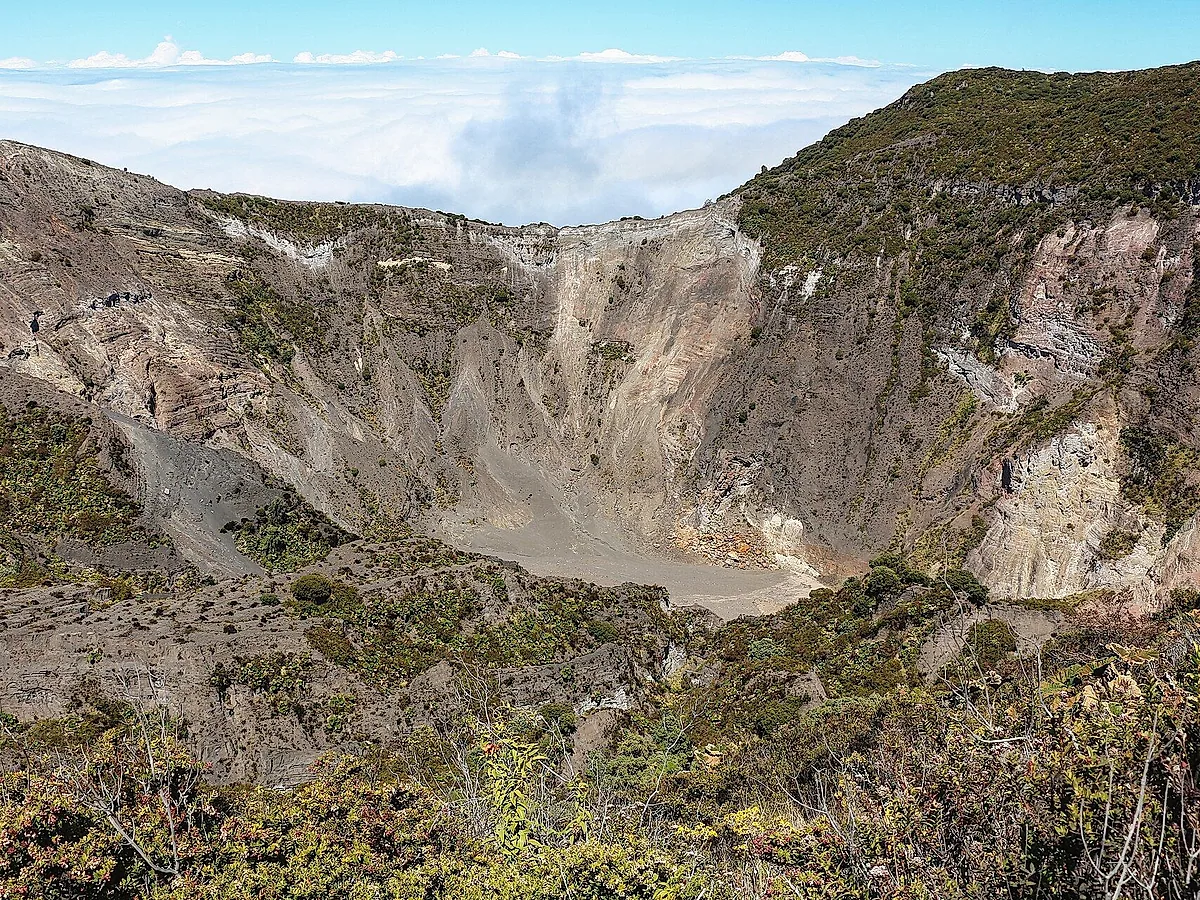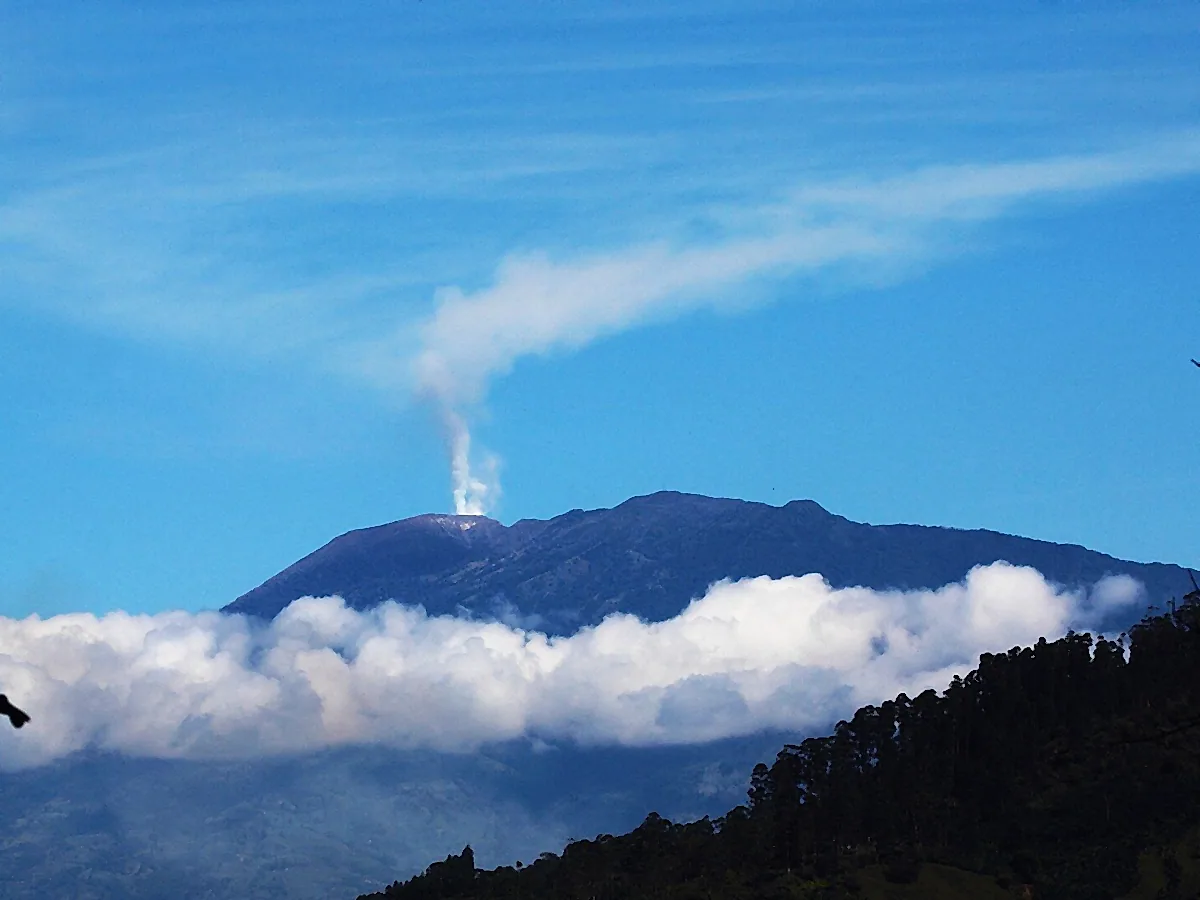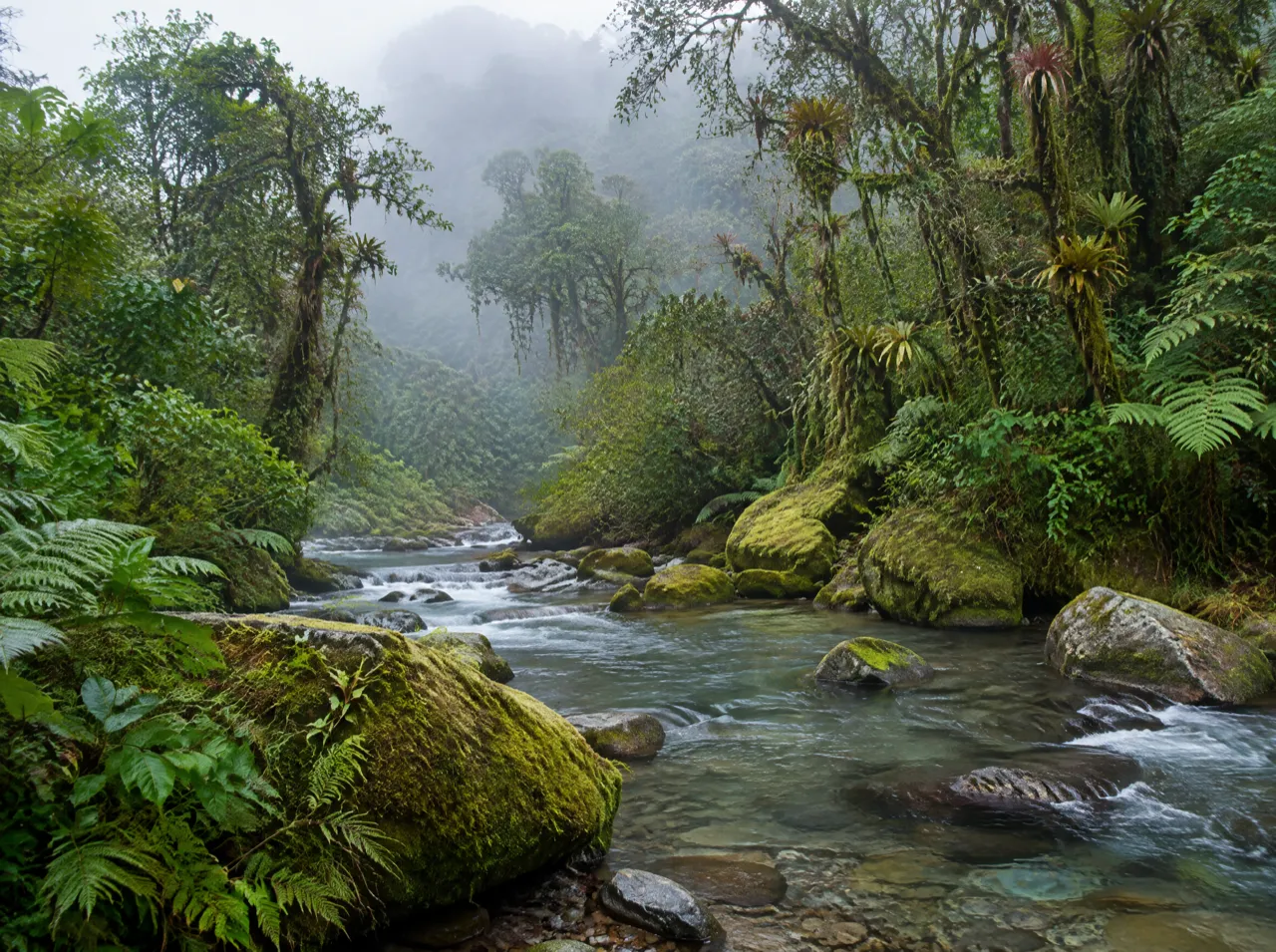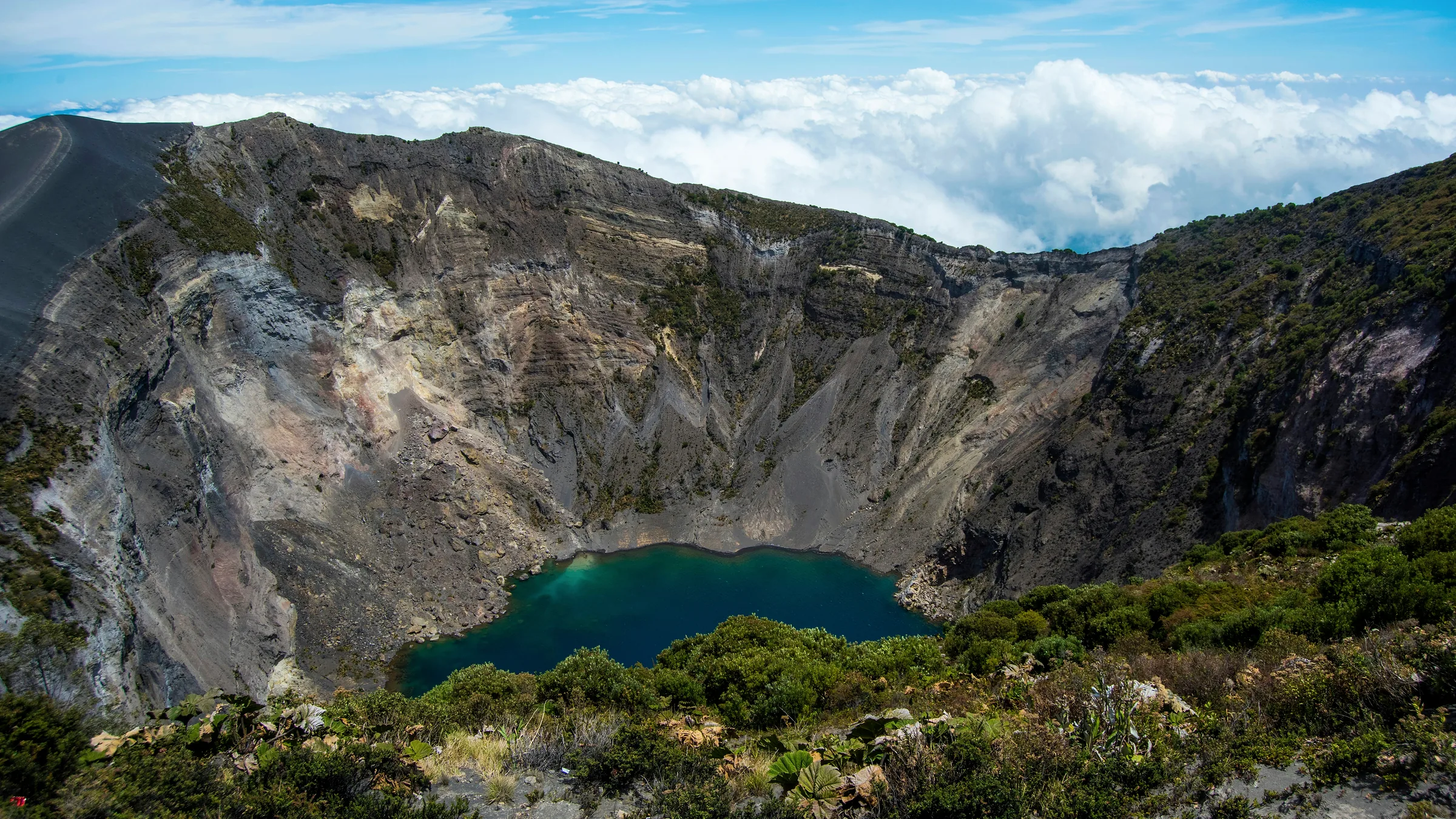
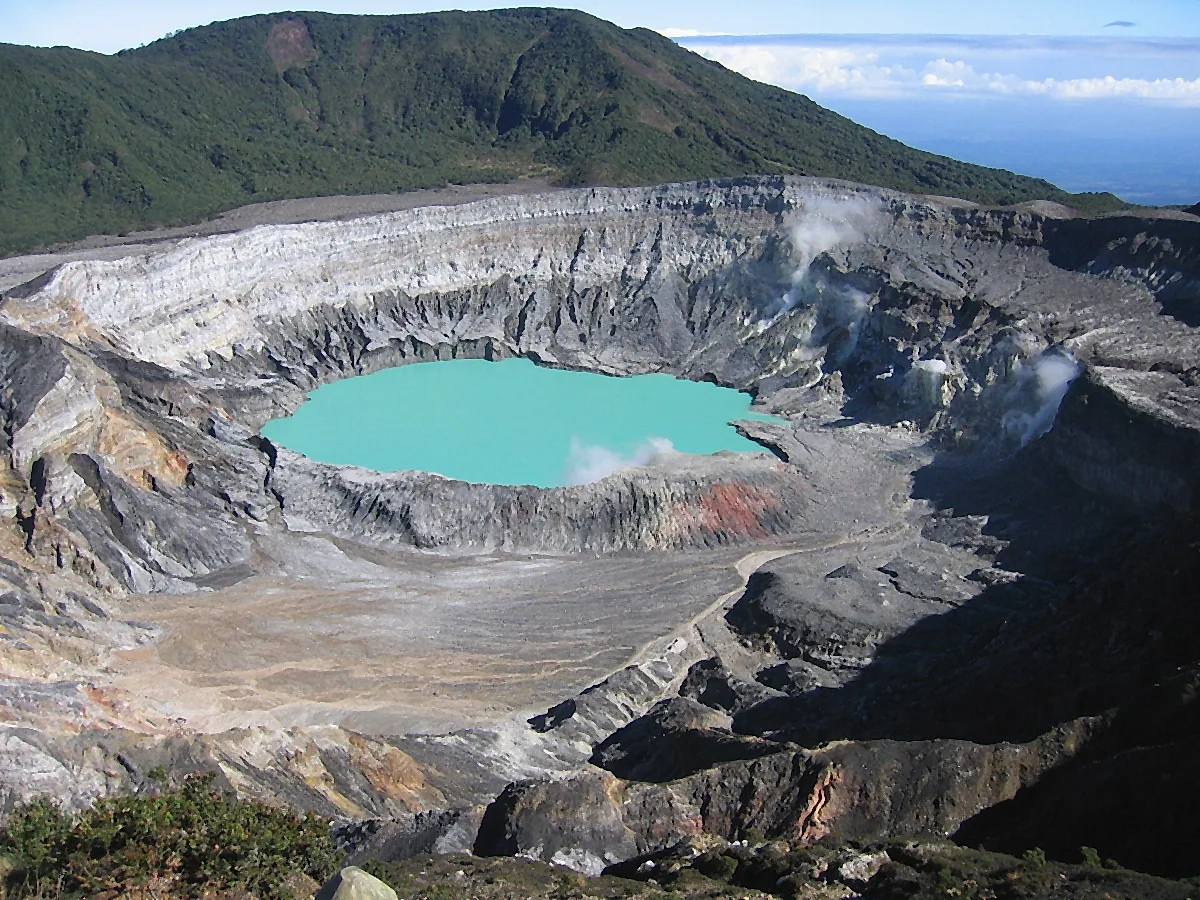
Lake at the bottom of a volcanic crater surrounded by rocky walls.

Costa Rica · Central Valley

Poás
& Irazú.

Craters within reach of the capital

Photo: Juliana Barquero

Before you go,
understand the place.

Poás and Irazú are about 1.5 hours from San José on opposite sides of the Central Valley, and they are the easiest volcano trips from the capital. Both require a ticket booked online, and conditions change a lot from day to day: cloud can hide everything.

Best time to go
The dry season (December to April) gives the best chance of a clear crater, and Irazú is usually clearest in February and March. From May to November rain arrives in the afternoon, usually around 14:00. At any time of year, go early.
Getting there
Each volcano is about 50 km and 1.5 h by car from San José: Poás via Alajuela and Poasito, and Irazú via Cartago. Buses are limited, and day tours run from the capital. In every case you need your ticket booked online for a date and time.

Eight ways to explore

Themed guides

Places grouped by theme, to plan your day.

  • 7 places

    Volcanoes: what is open and what is not

    Status of the craters and trails at Poás, Irazú, Turrialba and Barva in late September 2026, with current restrictions.

    Open the full guide
  • 5 places

    Waterfalls near Poás

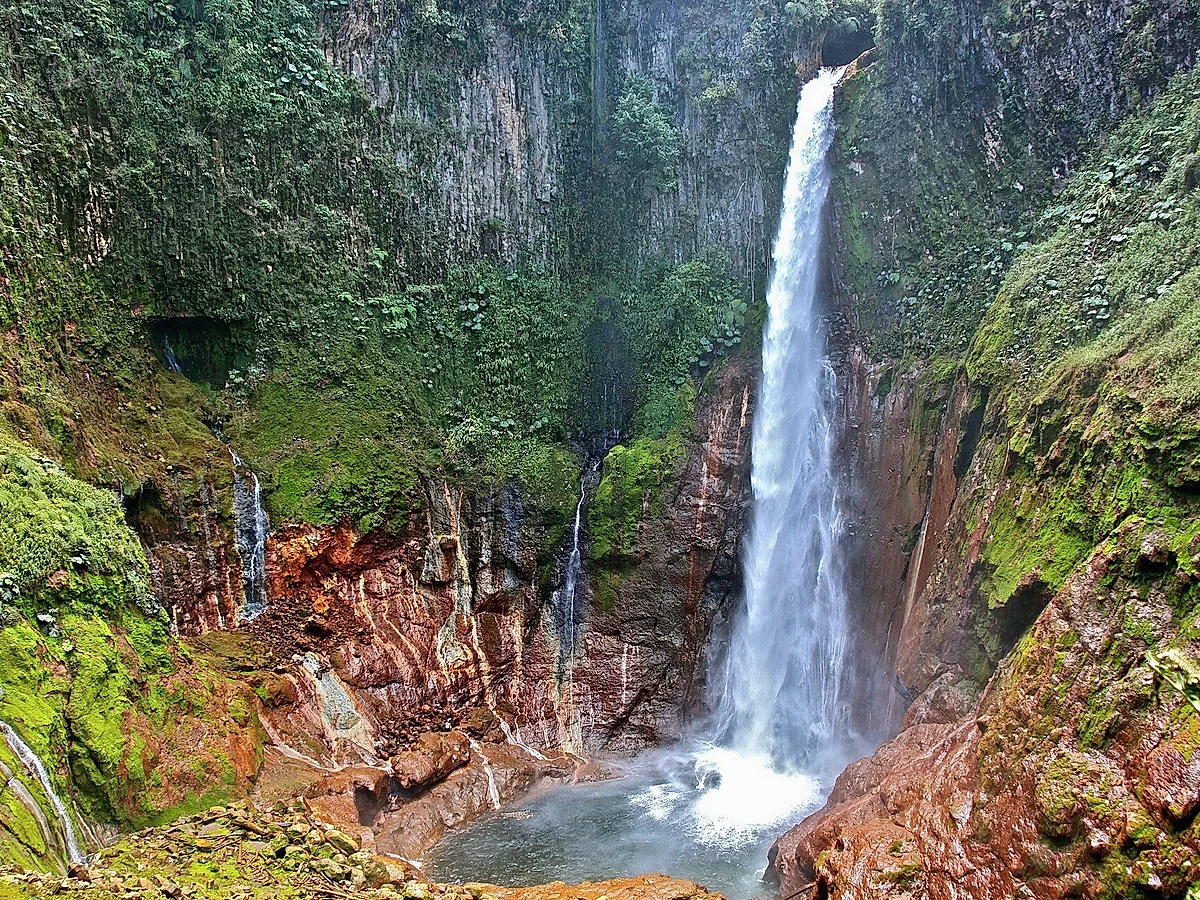
    From the La Paz trails to the blue falls of Bajos del Toro, under two hours from San José.

    Open the full guide
  • 5 places

    Coffee, strawberries and farms

    Coffee tours on the slopes of Poás and Barva and the strawberries of Poasito, easy to pair with the volcano.

    Open the full guide
  • 9 places

    The Orosi Valley in a day

    Lookouts, colonial churches, Lake Cachí, thermal pools and rainforest on a short loop from Cartago.

    Open the full guide
  • 6 places

    History and heritage

    From pre-Columbian Guayabo to colonial churches and Cartago’s Basilica.

    Open the full guide
  • 4 places

    Western Valley towns: Grecia, Sarchí and Zarcero

    Free stops on the San José to La Fortuna route: painted oxcarts, a metal church and a topiary park.

    Open the full guide
  • 5 places

    Adventure from Turrialba

    Rafting on the Pacuare and Reventazón, guided Turrialba volcano and the Braulio Carrillo forest.

    Open the full guide
  • 1 place

    Barbilla National Park

    A SINAC national park between Limón and Cartago, with a short trail and another to the Dantas River and its waterfalls. Its status is not confirmed.

    Open the full guide

The place, in context

Everything you can do

Closed or restricted places are included and flagged, so you know what to expect.

Showing 36 of 36 · 4 closed or restricted, flagged · 1 unconfirmed, flagged

Nature and jungle · 21

Volcano and mountain · 1

Living culture · 10

City and food · 4

Poás & Irazú · Practical guide

The essentials

  1. Poás Volcano National Park (created in 1971, 6,506 ha) holds an acidic lake at 20–50 °C and, in an older crater, the cold Botos lagoon, about 400 m wide.
  2. Poás averages about 12 °C and 3,500 mm of rain a year; Irazú averages 5–9 °C, with fog most of the time around the craters.
  3. Irazú has five craters. Its name comes from an indigenous word that SINAC translates as “hill of thunder and tremor”.
  4. Irazú erupted between 1963 and 1965, and a 1963 lahar destroyed about 300 houses in Taras, Cartago.
  5. Besides the Craters sector, Irazú has the Prusia sector, with 16 km of trails and picnic areas.

Poás & Irazú · Practical guide

Where to stay

Poasito, Fraijanes and Vara Blanca
Mountain towns known for strawberries and dairy, closest to the Poás entrance. Good for an early start and the first time slot.
Alajuela
The town with the most services near Poás and a few minutes from the international airport. Good for arrival or departure nights.
Cartago and the Orosi Valley
Cartago is a historic town and the Orosi Valley is green with hot springs. They pair well with Irazú and avoid San José traffic.
San José
Both volcanoes work as a day trip from the capital, with a very early start.

Poás & Irazú · Practical guide

Practical tips

  1. Tickets are sold online only (serviciosenlinea.sinac.go.cr), with advance payment; there is no sale at the Poás gate. Slots sell out in busy periods: book ahead and bring your passport.
  2. Conditions at Poás change. In late August 2026 it was on green alert, with capacity cut by half, helmets mandatory and only two trails open, and it can close at short notice. Check sinac.go.cr right before you go; in past closures SINAC offered rebooking or refunds.
  3. Irazú opens daily from 8:00 to 16:00, with last entry at 14:00 in the Craters sector and 13:00 in Prusia. SINAC does not refund the ticket if the crater is covered in cloud.
  4. Book the first morning slot: cloud usually fills the Poás crater by midday, and at Irazú it pays to arrive as early as possible.
  5. Wear closed shoes and warm layers. In both parks pets and leaving the trails are not allowed; Poás has no bins, so carry your rubbish out, and at Irazú coatis and raccoons steal food at the picnic areas.

Safety and precautions

  • Poás is an active volcano: the park warns of rockfall, ash and toxic gases. Always follow rangers’ instructions if an evacuation is needed.
  • Irazú sits at 3,432 m and is often cold and foggy; some people feel short of breath at altitude.
  • SINAC states that a clear crater view cannot be guaranteed. The UK FCDO advises avoiding volcanic areas in heavy rain.

Frequently asked questions

Can I buy a ticket at the gate?

No. SINAC states that entry to Poás and Irazú is only through its online reservation system, and Poás has no gate sales. Book at serviciosenlinea.sinac.go.cr, pay in advance and bring your passport.

How much does it cost and how long can I stay?

Foreign adults (13 and over) pay $16.95 and children aged 2 to 12 pay $5.65 at both parks, VAT included. Parking is extra and paid by card. At Poás, time at the crater viewpoint is limited (about 20 minutes per turn, according to press and guides); SINAC’s Irazú page gives no limit.

Is Poás open right now?

Check before you go. It reopened on 30 July 2025 after four months closed and, on 28 August 2026, was running on green alert with reduced capacity, mandatory helmets and only two trails open. It can close at short notice when activity rises.

Poás & Irazú · Practical guide

Sources consulted

Information checked in . Prices, hours and rules change: confirm them with the official source before you travel.

  1. SINAC – Parque Nacional Volcán Poás2026
  2. SINAC – Parque Nacional Volcán Irazú2026
  3. Infobae – Costa Rica refuerza medidas en el volcán Poás2026
  4. Delfino.cr – CNE declara alerta verde en el Poás2026
  5. La República – Volcán Poás reabre sus puertas2025
  6. Hallo Costa Rica – Poás volcano guide2026
  7. UK FCDO – Costa Rica safety and security2026

Other destinations