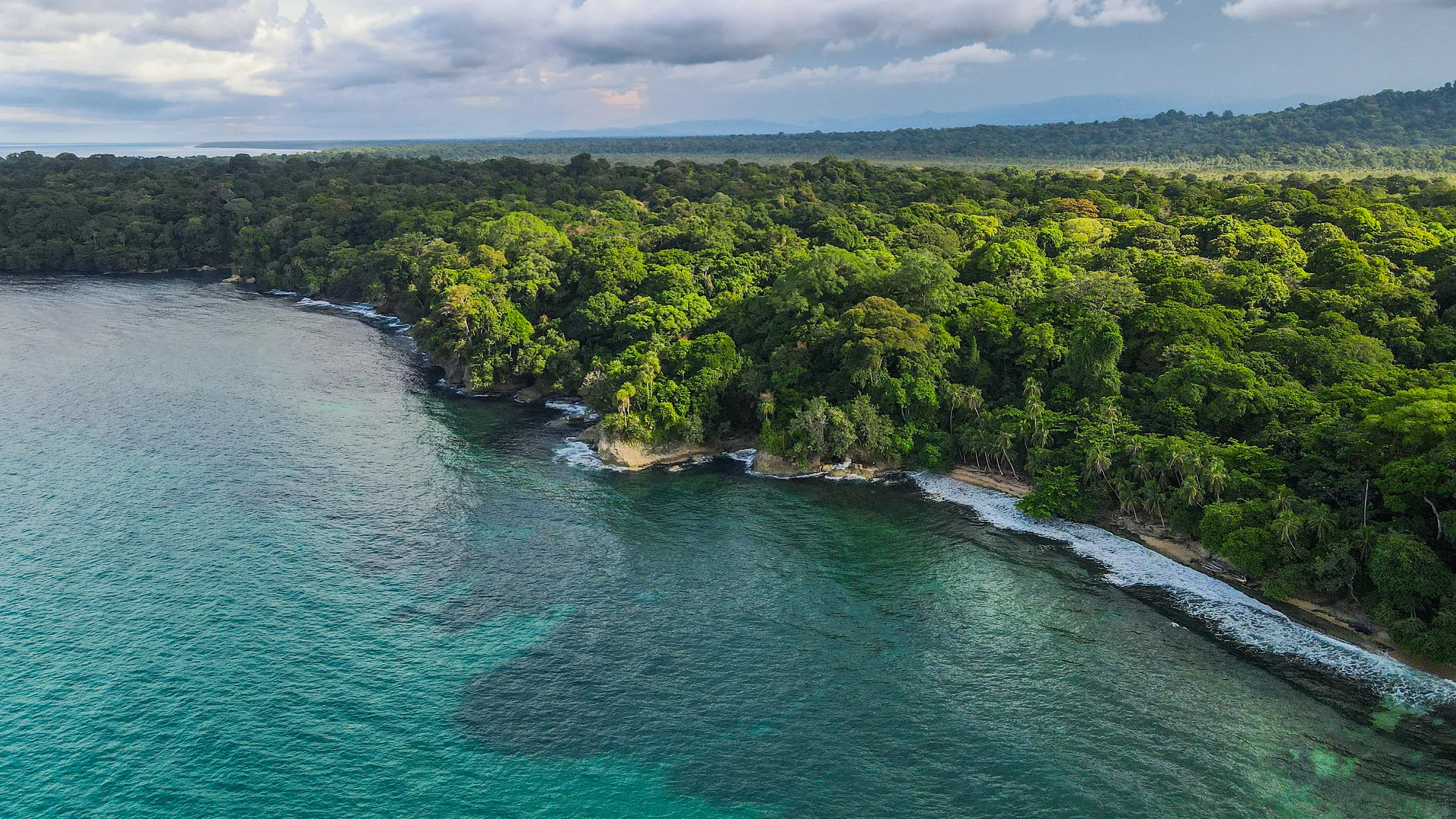
Aerial view of a forested coastline beside turquoise waters.

Costa Rica · South Caribbean

Puerto Viejo
& Cahuita.

Caribbean, culture and cacao

Photo: Jean Paul Montanaro

Before you go,
understand the place.

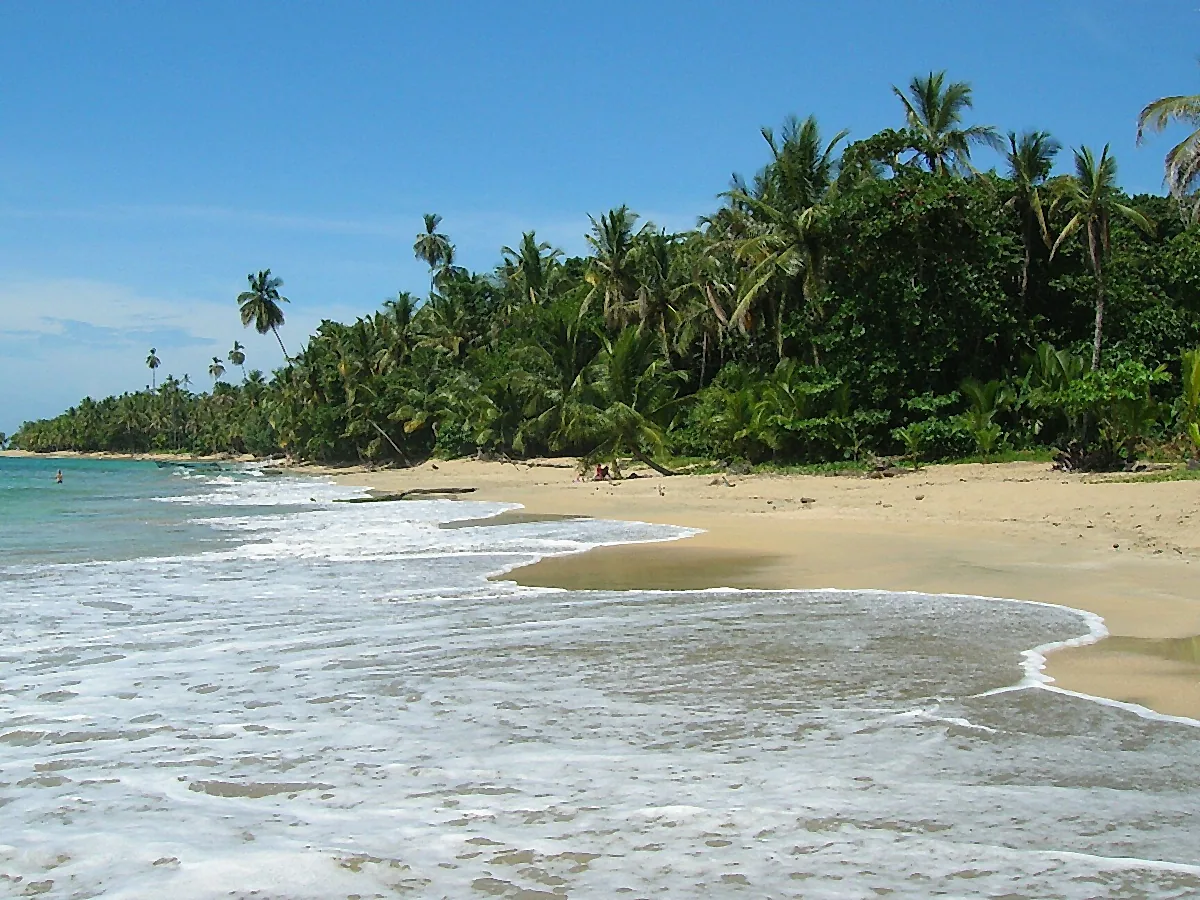
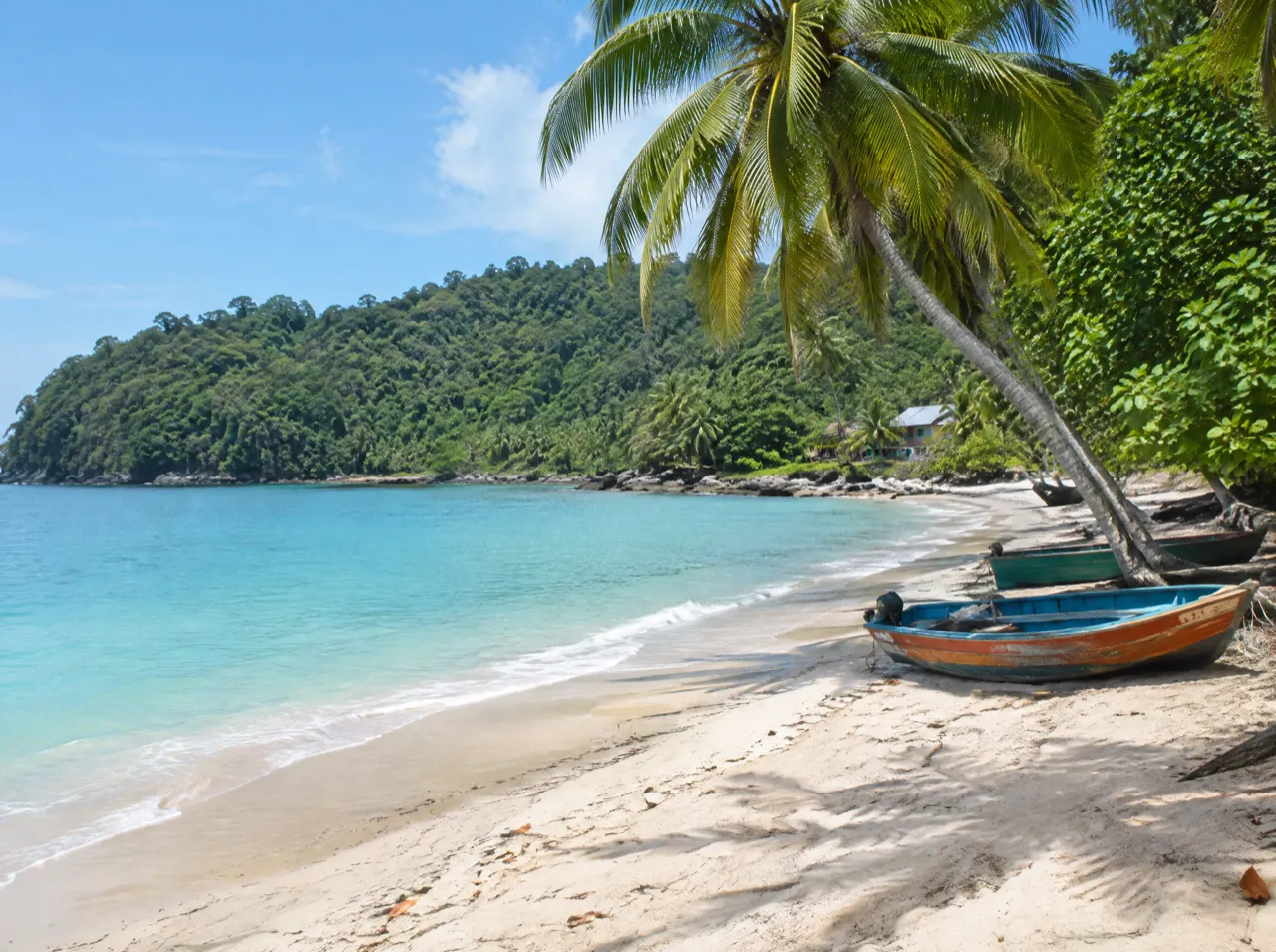
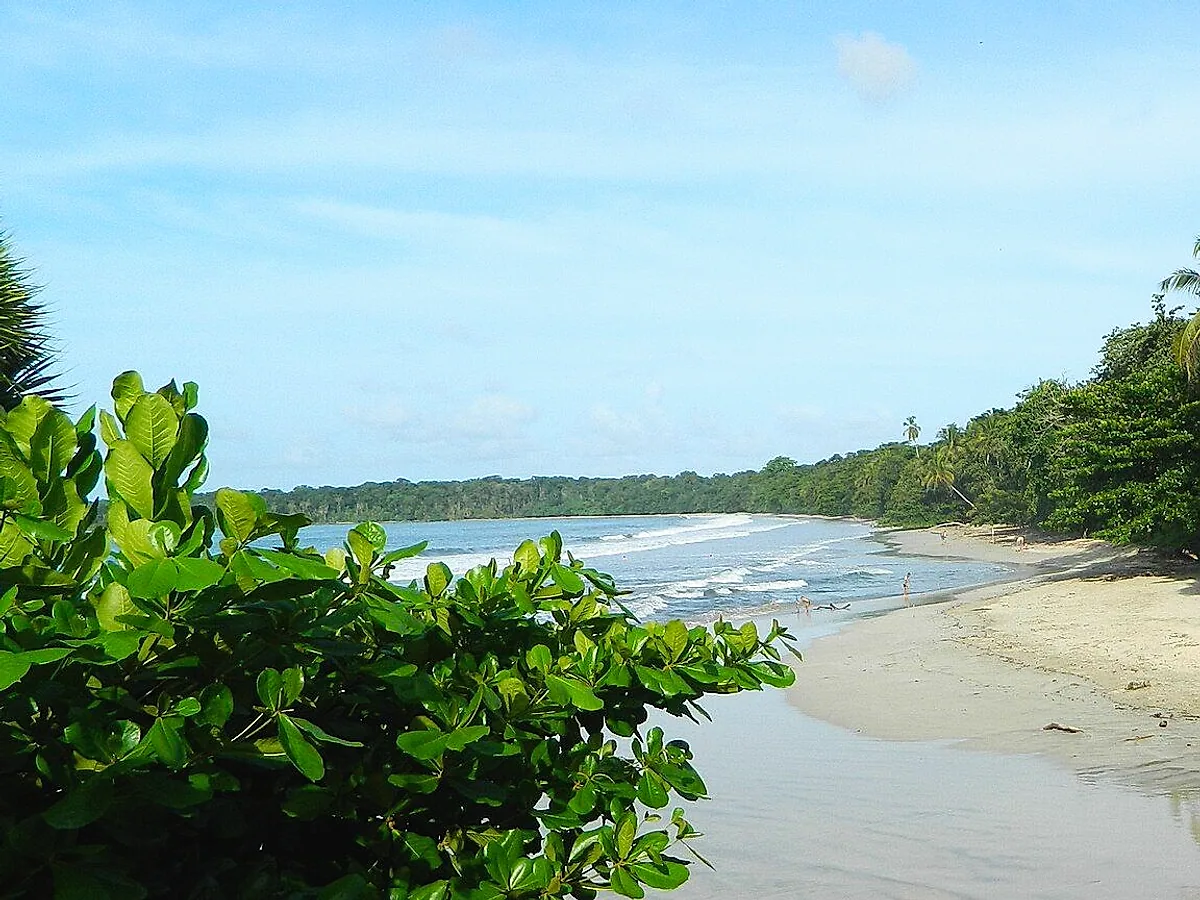
Puerto Viejo de Talamanca and Cahuita make up the best-known area of the South Caribbean: beaches, jungle down to the shore and a mix of Afro-Caribbean, Bribri indigenous, Costa Rican and expat communities.

Best time to go
The Caribbean does not follow the Pacific pattern: according to the national weather institute (IMN) there is no defined dry season, and even the least rainy months get 100 to 200 mm. The relatively drier windows are February and March, and September and October; December, January and July are the wettest. Surf at Salsa Brava only works well with the December-to-March swell.
Getting there
About 215 km and 4 to 4.5 h from San José on Route 32 (Zurquí tunnel, Guápiles and Siquirres to Limón) and then Route 36 south. There are direct buses run by Autotransportes MEPE (about 4.5 h to Puerto Viejo) and shuttles from the capital; most visitors arrive by road.

Six ways to explore

Themed guides

Places grouped by theme, to plan your day.

  • 7 places

    South Caribbean beaches

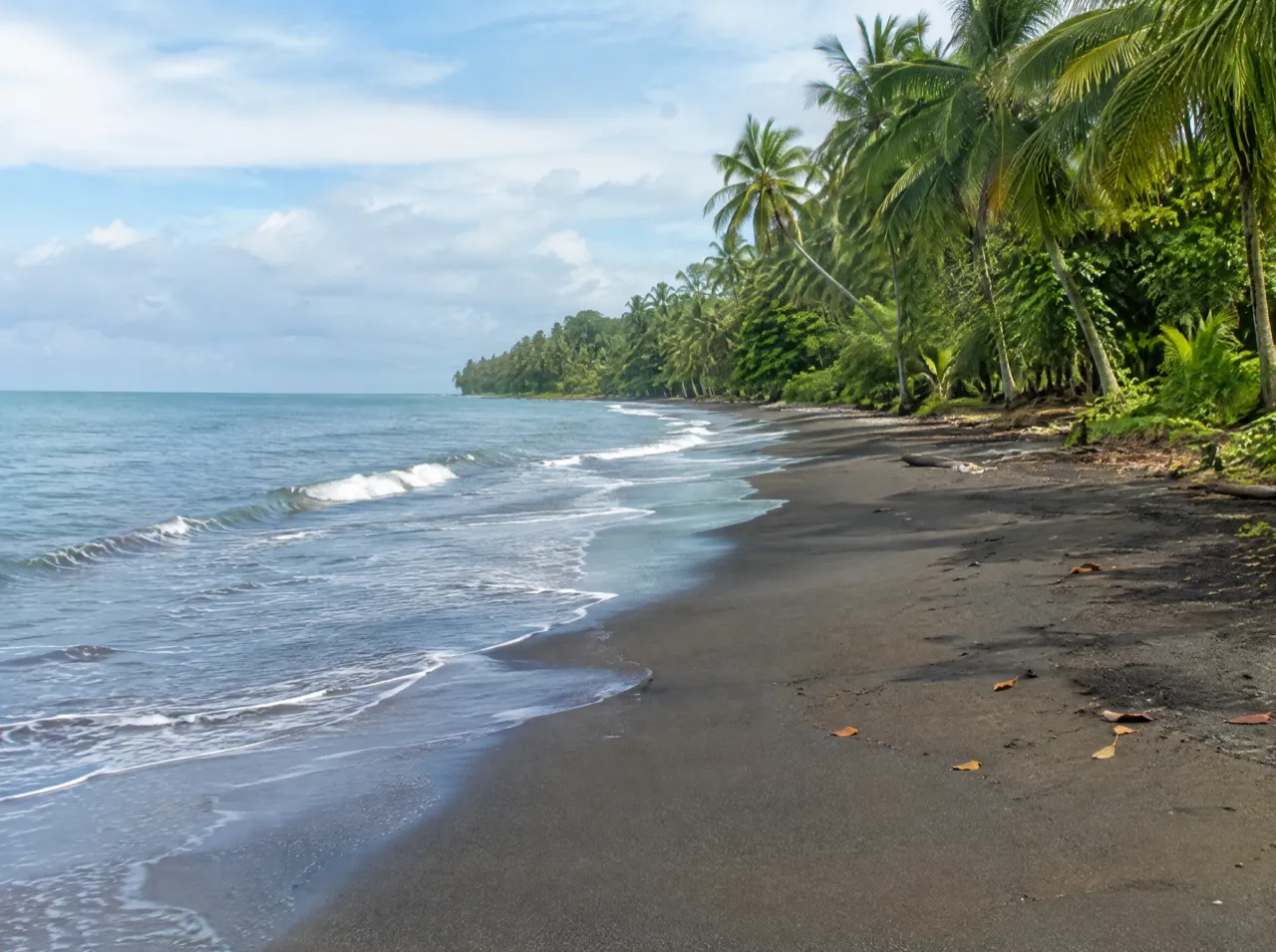
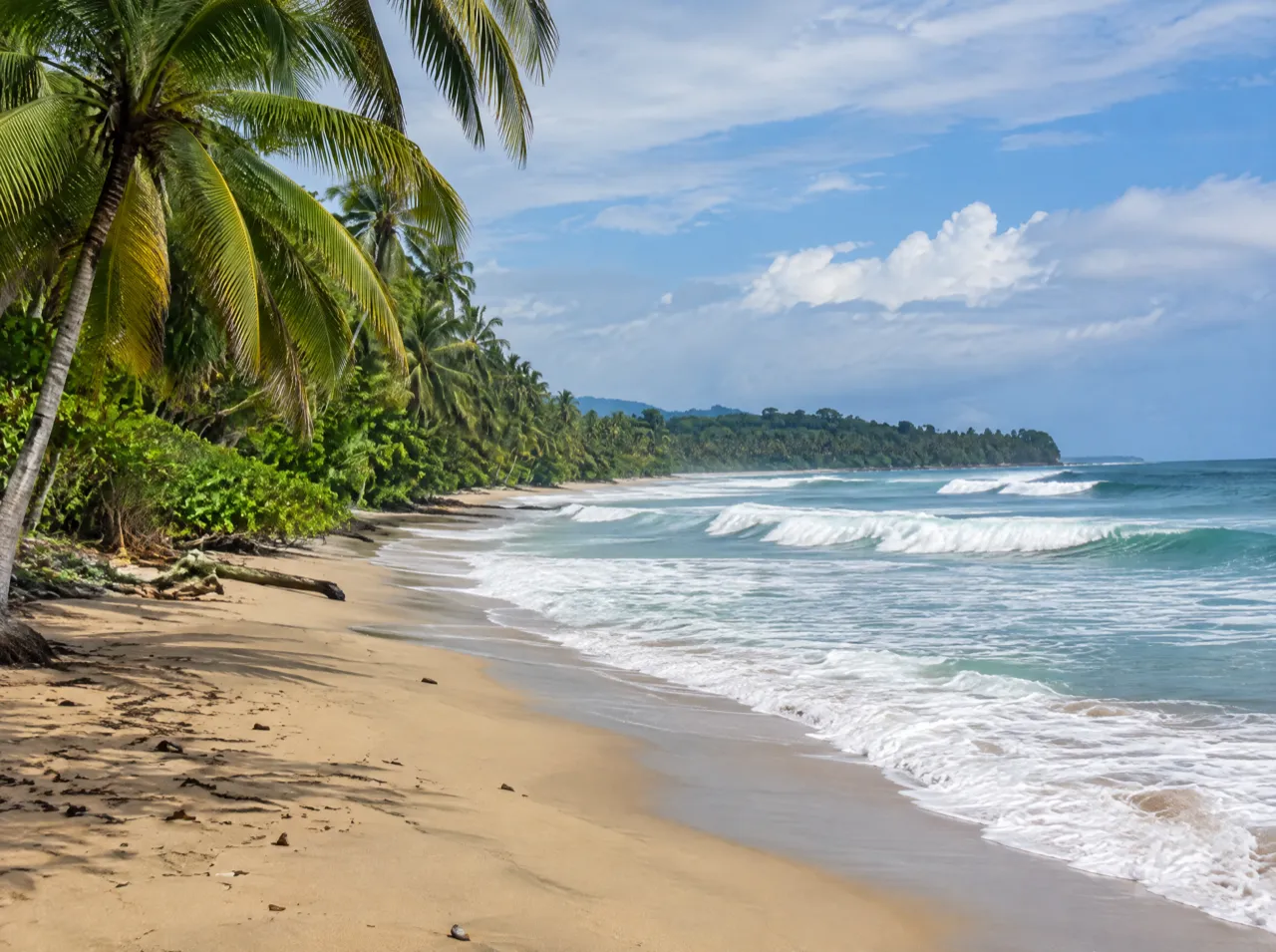
    From Cahuita to Manzanillo: which beaches suit swimming, which suit surfing and where to find tide pools and reef.

    Open the full guide
  • 9 places

    Wildlife, rescue centres and jungle trails

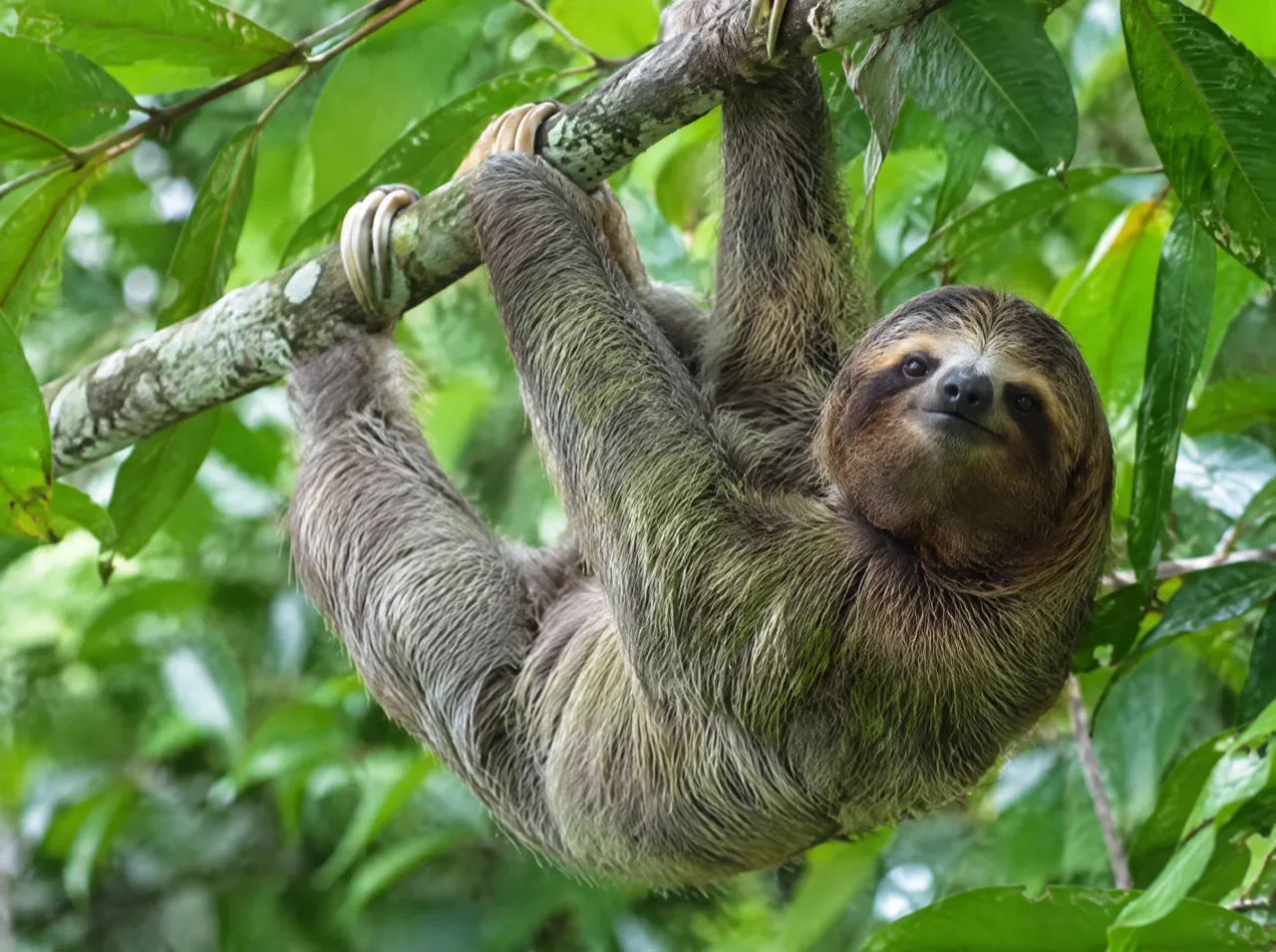
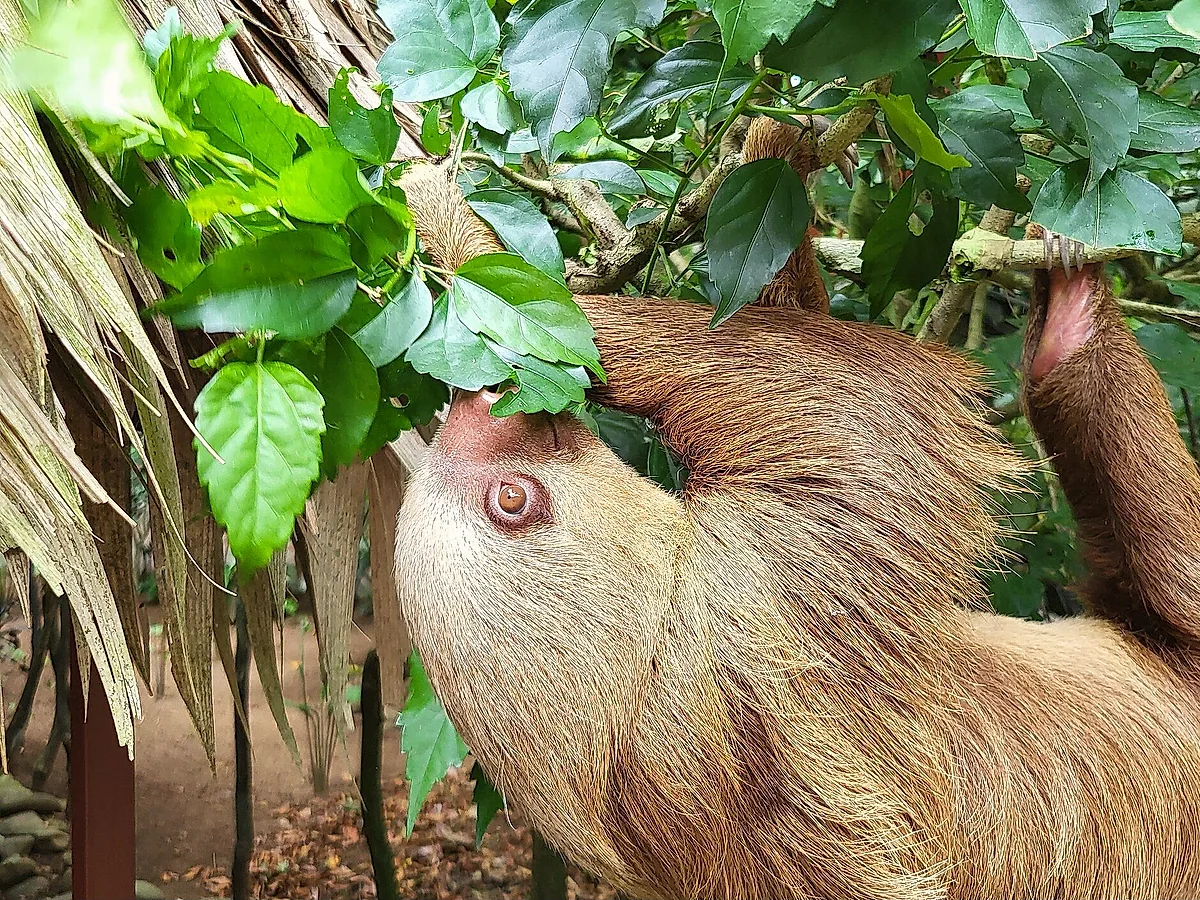
    Parks, refuges and rescue centres where you can see sloths, monkeys, macaws and turtles responsibly.

    Open the full guide
  • 9 places

    Cacao, Bribri culture and Afro-Caribbean flavour

    Chocolate tours, indigenous communities, calypso and coconut-milk cooking: the cultural side of the South Caribbean.

    Open the full guide
  • 9 places

    Water and adventure

    Snorkelling, dolphins, surf, kayaking and ziplines between Cahuita and Manzanillo.

    Open the full guide
  • 8 places

    Free or nearly free

    Public beaches, trails with a voluntary donation and town plans that need no tour.

    Open the full guide
  • 7 places

    Day trips, seasonal sights and closed places

    What depends on the season or has special rules, what no longer opens and the longer outings from Puerto Viejo.

    Open the full guide

The place, in context

Everything you can do

Closed or restricted places are included and flagged, so you know what to expect.

Showing 37 of 37 · 2 closed or restricted, flagged

Nature and jungle · 15

Sea, beach and reef · 7

Lakes, rivers and waterfalls · 6

Living culture · 5

City and food · 4

Puerto Viejo & Cahuita · Practical guide

The essentials

  1. Cahuita was declared a national monument in 1970 and a national park in 1978; SINAC calls its reef the best preserved in the Costa Rican Caribbean.
  2. At the Playa Blanca entrance (Cahuita town) you pay a voluntary cash contribution; at Puerto Vargas there is a fixed fee ($5.65 for non-resident foreign adults, according to SINAC).
  3. Salsa Brava, off Puerto Viejo, is a heavy, shallow reef break for experts, working mostly with the December-to-March swell.
  4. SINAC dates calypso in Limón to 1870, and calypso singer Walter Ferguson (1919–2023) lived in Cahuita.
  5. South of Puerto Viejo the coastal road runs through Cocles, Chiquita, Punta Uva and Manzanillo (13 km), next to the Gandoca-Manzanillo Wildlife Refuge.

Puerto Viejo & Cahuita · Practical guide

Where to stay

Puerto Viejo town
A bike-and-flip-flop hub with banks and ATMs, restaurants, nightlife and the Salsa Brava break a few hundred metres away. Works well if you have no car.
Playa Cocles and Playa Chiquita
A beach strip 2 to 4.5 km south of town (sources vary). Cocles is the popular surf beach, with powerful currents; Chiquita has tide pools and the Jaguar Rescue Center nearby.
Punta Uva and Manzanillo
A quieter, forested area with calmer water (Manzanillo has a coral reef near the shore and the Gandoca-Manzanillo refuge is close). Little commercial development: bring cash.
Cahuita town
A small, walkable Afro-Caribbean town next to the park’s Playa Blanca entrance. It has the MEPE bus terminal in the centre and Playa Negra nearby.

Puerto Viejo & Cahuita · Practical guide

Practical tips

  1. At Cahuita National Park bring cash for the voluntary contribution at the Playa Blanca entrance; Puerto Vargas accepts cards. According to SINAC’s management plan, the section between Punta Cahuita and Puerto Vargas closes at 14:00.
  2. SINAC recommends hiring an accredited local guide, staying on the trails, wearing non-slip clothing, biodegradable sunscreen and repellent, and not standing on the corals. Pets, alcohol and weapons are not allowed.
  3. Cycling is the usual way to get between Puerto Viejo and Manzanillo (about $3–12 a day, according to a 2025 blog), but bike theft is common even with rentals: lock the frame and the wheel and do not ride at night on dark roads.
  4. There are ATMs of Banco de Costa Rica, Banco Nacional and BAC in Puerto Viejo, and Cahuita relies on a BCR one. They sometimes run out of cash or fail: carry cash.
  5. By road, take Route 32 in daylight: there is fog at the Zurquí tunnel and landslides in the rainy season. Watch out for Playa Negra: there is one in Cahuita and another about 2 km north of Puerto Viejo, so confirm which one your lodging means.
  6. The Costa Rican Tourism Board (ICT) issues general, local and specialised tour-guide credentials and publishes a list of guides on its website. Consult it to check your guide’s credential.

Safety and precautions

  • Rip currents are the main hazard. Playa Cocles is known for strong rips and has seen several drownings; swim only where lifeguards are on duty and, if caught in a current, do not fight it: float or swim parallel to the shore and then angle back in. Calmer options are Punta Uva and Manzanillo.
  • Lifeguard coverage is thin: assume there is none.
  • Petty theft is common: backpacks on the beach, bikes and bags snatched late at night. Do not walk alone at night on unlit roads or beaches. The UK FCDO also flags muggings and asks for care at ATMs.
  • The coastal road toward Manzanillo is unpaved in places and has many potholes.

Frequently asked questions

When is the best time to visit Puerto Viejo and Cahuita?

It is not the same as on the Pacific side. According to the IMN there is no true dry season: rain stays at 100 to 200 mm even in the least rainy months. The relatively dry windows are February and March, and September and October; December, January and July are the wettest. That is why September and October, the rainiest time on the Pacific, can be a good moment here; Salsa Brava surf only works well with the December-to-March swell.

Is Cahuita National Park free?

It depends on the entrance. At Playa Blanca (next to Cahuita town) entry is a voluntary cash contribution, according to SINAC. Puerto Vargas charges a fixed fee: $5.65 for non-resident foreign adults and children (₡1,130 for resident adults and ₡565 for resident children), with cards accepted. Hours vary by source: confirm them the day before.

Can I swim at Playa Cocles?

It is risky. Cocles has very strong rip currents and has seen several drownings; lifeguards are not always present. If you just want to swim, calmer spots such as Punta Uva or Manzanillo are usually better, and if caught in a current, swim parallel to the shore.

Puerto Viejo & Cahuita · Practical guide

Sources consulted

Information checked in . Prices, hours and rules change: confirm them with the official source before you travel.

  1. SINAC – Parque Nacional Cahuita2026
  2. SINAC – Plan General de Manejo del Parque Nacional Cahuita 2016–20262016
  3. IMN – Clima: Región Caribe2026
  4. Visit Costa Rica (ICT) – Climate2026
  5. ICT – Cahuita and Puerto Viejo mini-guide2026
  6. Autotransportes MEPE – Horarios San José / Cahuita2026
  7. Wikipedia – Puerto Viejo de Talamanca2026
  8. Two Weeks in Costa Rica – Road conditions of specific routes2026
  9. UK FCDO – Costa Rica safety and security2026
  10. ICT – Guías de turismo (consultada el 5 oct. 2026)2026

Other destinations