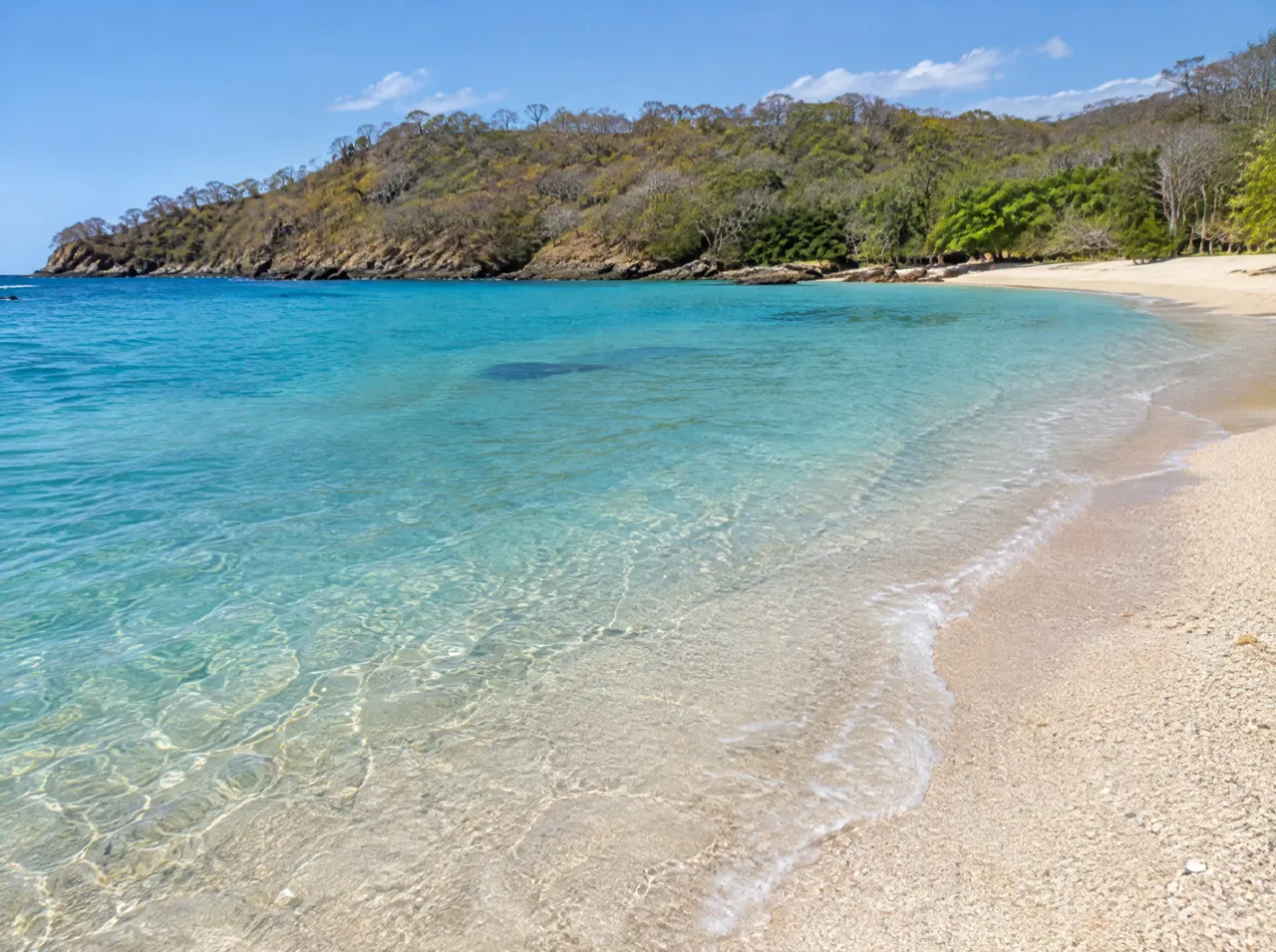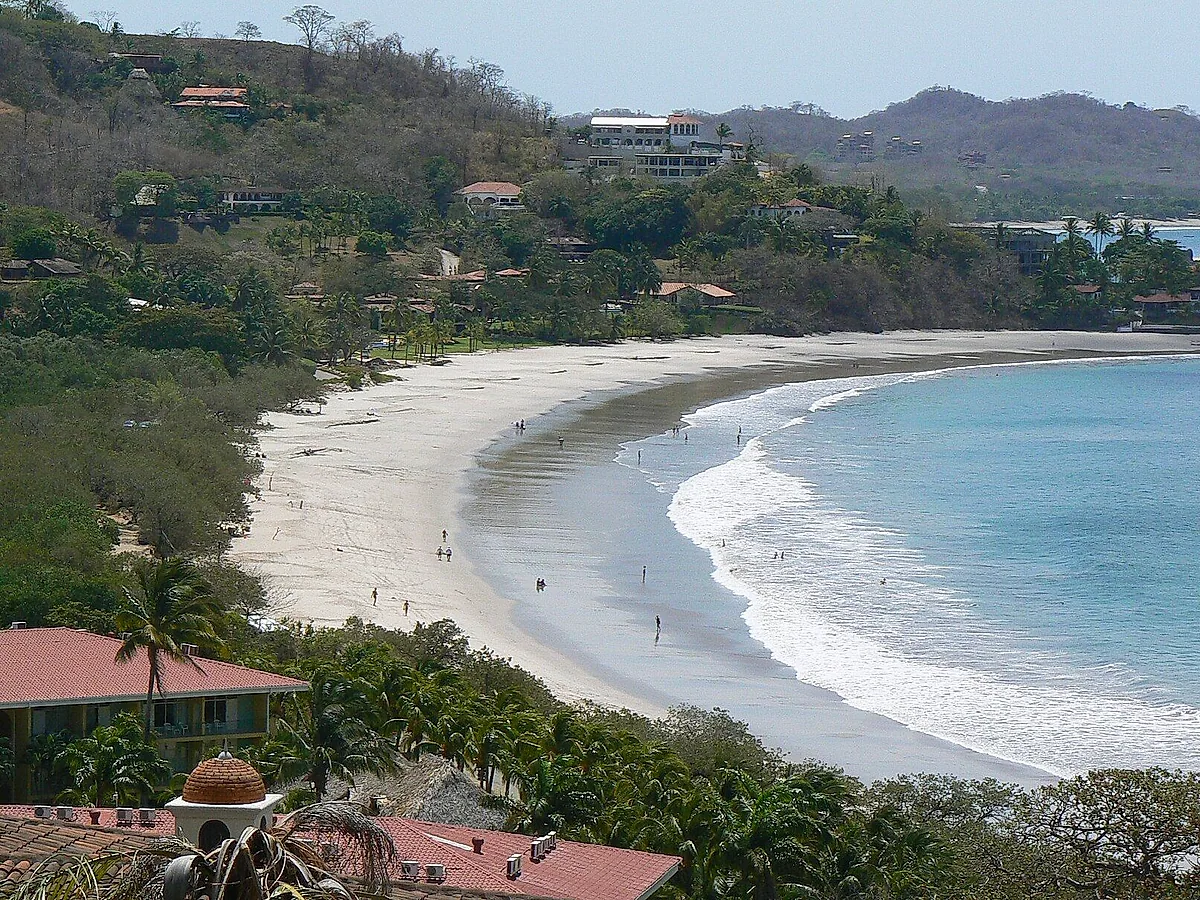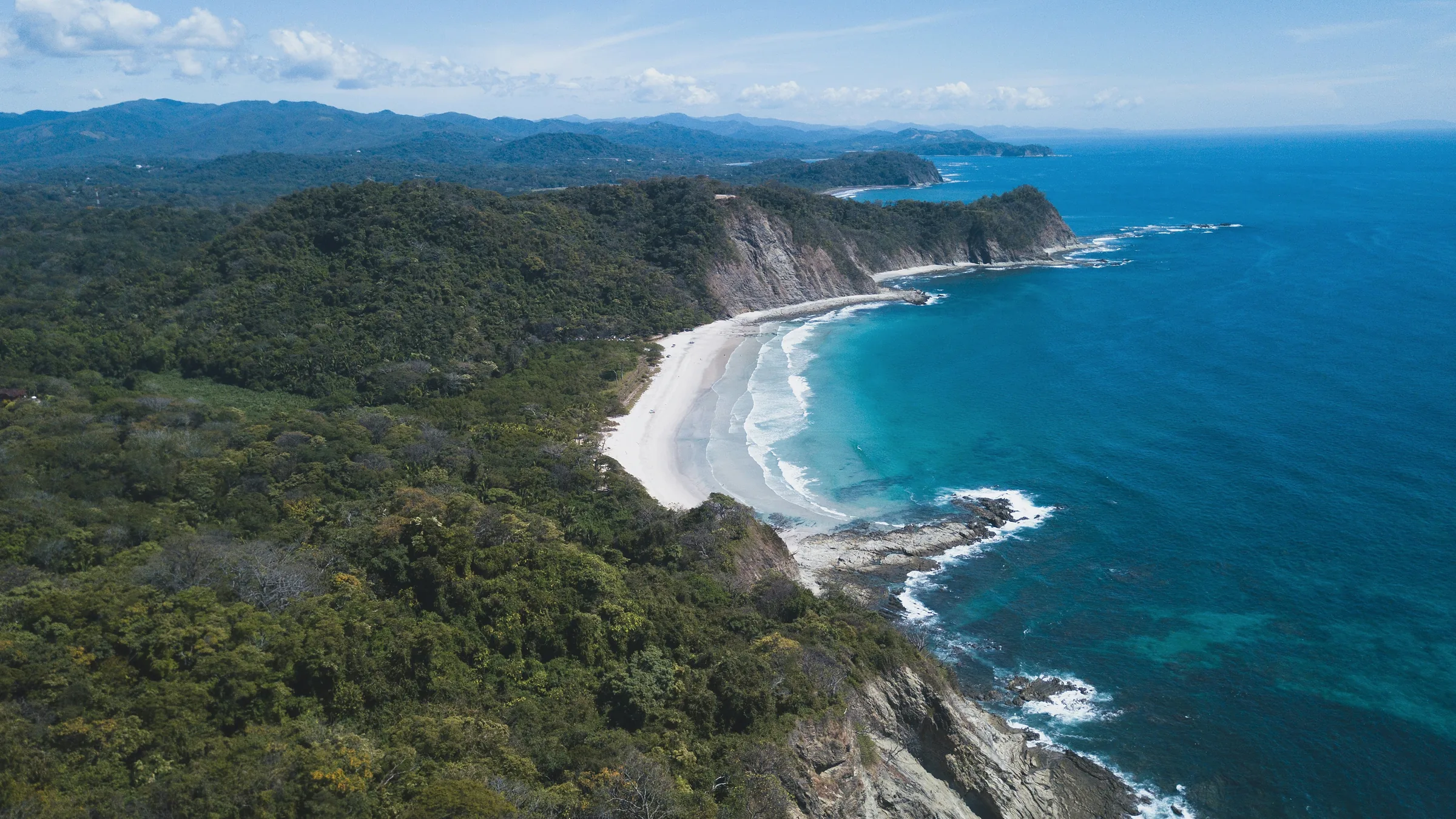
Aerial view of a curved beach below wooded hills in Guanacaste.

Costa Rica · North Pacific

Guanacaste.

Sun, surf and long sunsets

Photo: Luis Diego Aguilar

Before you go,
understand the place.

Guanacaste is one of the driest and warmest regions of Costa Rica. It has five or six months of good beach weather, with plenty of light and long sunsets.

Best time to go
The dry season runs from December to April: the national weather institute (IMN) says only about 4% of annual rain falls from December to March. From May to November it rains in the afternoon, with a lull (the “veranillo”) in July and August, and September and October are the wettest months. The Papagayo winds blow mostly from November to March.
Getting there
From San José it is about 260–290 km and 4 to 4.5 h by paved road to Tamarindo. Liberia airport (LIR) is 1 h 15 min to 1 h 45 min from Tamarindo. There are also direct buses from the capital (6–7 h), shuttles and SANSA flights to Tamarindo: confirm current schedules and prices.

Seven ways to explore

Themed guides

Places grouped by theme, to plan your day.

  • 7 places

    Calm beaches for swimming

    Sheltered bays where the sea is usually calm; even so, none has permanent lifeguards.

    Open the full guide
  • 7 places

    Surfing in Guanacaste

    From lessons on Tamarindo’s small waves to experts-only breaks in Santa Rosa.

    Open the full guide
  • 8 places

    National parks and wildlife

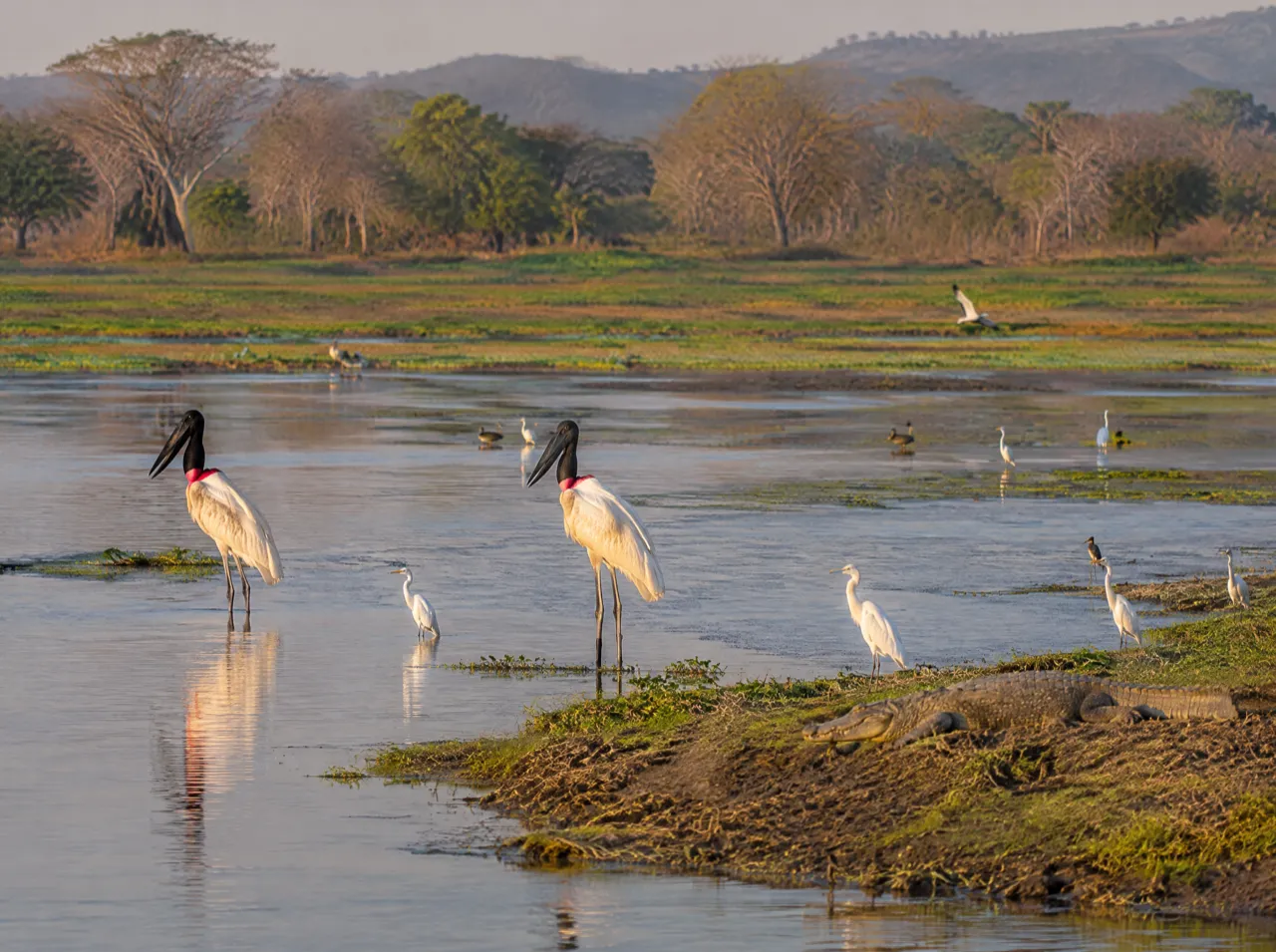
    Wetlands, mangroves and dry forest for crocodiles, monkeys, waterbirds and turtles.

    Open the full guide
  • 6 places

    At sea: diving, sailing and fishing

    Boat trips from Coco, Flamingo and Tamarindo to islands, bays and deep water.

    Open the full guide
  • 7 places

    Inland day trips

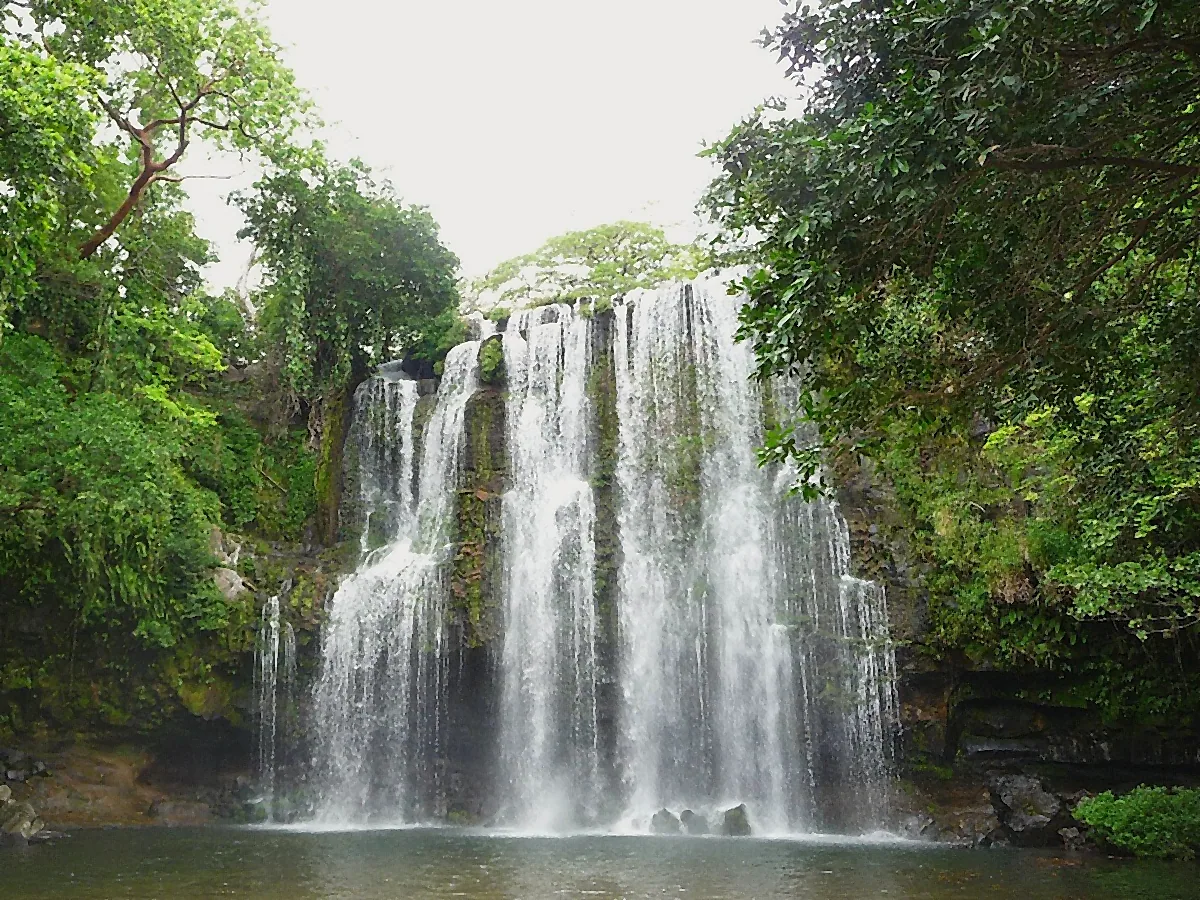
    Waterfalls, caves, history and crafts less than two hours from the coast.

    Open the full guide
  • 8 places

    Free or almost free

    Public beaches, towns and waterfalls that cost little or nothing.

    Open the full guide
  • 7 places

    Closed, restricted or seasonal

    Places with access rules, seasons or closures worth knowing before you go.

    Open the full guide

The place, in context

Everything you can do

Closed or restricted places are included and flagged, so you know what to expect.

Showing 40 of 40 · 5 closed or restricted, flagged

Nature and jungle · 17

Sea, beach and reef · 15

Lakes, rivers and waterfalls · 4

Living culture · 3

City and food · 1

Guanacaste · Practical guide

The essentials

  1. According to the IMN, only about 4% of annual rain falls between December and March. It is one of the driest regions in the country.
  2. Liberia airport (LIR) has a 2,750 m runway and handled over 1.9 million passengers in 2024.
  3. Las Baulas Marine National Park (created on 9 July 1991) protects the largest leatherback colony on the Pacific coast of the Americas. SINAC sets the viewing season from 20 October to 15 February, with groups of up to 15 people and a guide.
  4. Tamarindo was incorporated as a town on 27 November 1995 (7,132 residents in 2022) and is the main surf-lesson hub; Playa Grande and Langosta, inside the park, also have waves.
  5. Playa Conchal is a crushed-shell beach reached on foot from Brasilito. The Gulf of Papagayo has been a state tourism initiative since 1972.

Guanacaste · Practical guide

Where to stay

Tamarindo
The busiest and most developed beach town: compact and walkable, with surf schools, restaurants, nightlife and several banks. Wikivoyage calls it somewhat touristy and warns of pickpockets near nightlife venues.
Playa Grande and Langosta
A quieter, nature-focused strip next to Las Baulas park, with steady waves and a nesting season. Reached by a 17 km road via Villareal or by water taxi across the estuary.
Brasilito and Playa Conchal
A small village with a public car park and walking access to the shell beach; behind Conchal there is gated residential and resort development.
Gulf of Papagayo (Hermosa, Coco and the Papagayo Peninsula)
Coco is the most developed town, with shops, restaurants and bars; Hermosa is described as a calm, family-friendly Blue Flag beach; the Papagayo Peninsula is the large-resort zone near the airport.

Guanacaste · Practical guide

Practical tips

  1. Do not leave valuables in a parked car anywhere on this coast. The UK FCDO also warns of thieves who pretend to help after puncturing a tyre.
  2. Playa Conchal has no facilities: bring water, food, sunscreen and cash. Park in Brasilito (public lot about ₡3,000–4,000, roughly $5–7, in October 2025) and walk 15 to 20 minutes along the beach; wear water shoes on the shells.
  3. Beaches are public by law for the first 50 m from the high-tide line (Law 6043), but resorts control vehicle access: do not expect to drive to Conchal.
  4. Turtle tours at Playa Grande: SINAC requires an authorised guide, groups of at most 15, a red-filtered torch only, and does not allow photographing the turtles. The season runs from 20 October to 15 February.
  5. The Papagayo winds (December to March, peaking in February) can make beach days gusty and dusty.
  6. The Costa Rican Tourism Board (ICT) issues general, local and specialised tour-guide credentials and publishes a list of guides on its website. Consult it to check your guide’s credential.

Safety and precautions

  • Rip currents are very common and many beaches have no lifeguards. Costa Rica records 50 to 60 drownings a year, about a third of them tourists (FCDO). Swim only at guarded beaches and ask locals about conditions.
  • Crocodiles are documented at river mouths and in the surf at Tamarindo, Playa Grande and Playa Hermosa. The environment ministry (MINAE) advises against surfing near river mouths and at dawn or dusk (Tico Times, January 2026).
  • Theft from vehicles and from bags left on the beach is the most common crime: leave nothing in sight.

Frequently asked questions

Do I need a car to enjoy Tamarindo and Playa Conchal?

Not necessarily. Tamarindo is compact and walkable, and shuttles and taxis run from Liberia airport (1 h 15 min to 1 h 45 min on a paved road). A car helps for Conchal, Playa Grande and the Papagayo resorts, but you cannot drive to Conchal: you walk from Brasilito.

Is Playa Conchal public, and how much does it cost?

Costa Rican law makes the first 50 m from the high-tide line public, and no entrance fee was reported at Conchal. The practical access is through the public beach and car park in Brasilito (₡3,000–4,000 in October 2025) and a 15–20 minute walk. Resort guests enter through the resort gate.

When can I see leatherback turtles at Playa Grande?

SINAC’s page gives a viewing season from 20 October to 15 February, with groups of up to 15 people and strict rules (red-filtered light, no photos, no touching). Other sources say nesting runs from October to March or even May, so book with an authorised guide and confirm dates with the park.

Guanacaste · Practical guide

Sources consulted

Information checked in . Prices, hours and rules change: confirm them with the official source before you travel.

  1. IMN – Clima, variabilidad y cambio climático: Pacífico Norte2026
  2. Visit Costa Rica (ICT) – Climate2026
  3. SINAC – Las Baulas National Marine Park2026
  4. Wikipedia – Tamarindo, Costa Rica2026
  5. Wikipedia – Daniel Oduber Quirós International Airport2026
  6. Rough Guides – San José to Tamarindo2026
  7. Vamos Rent-A-Car – Playa Conchal access guide2025
  8. Tico Times – Crocodiles share waves with surfers2026
  9. UK FCDO – Costa Rica safety and security2026
  10. ICT – Guías de turismo (consultada el 5 oct. 2026)2026

Other destinations